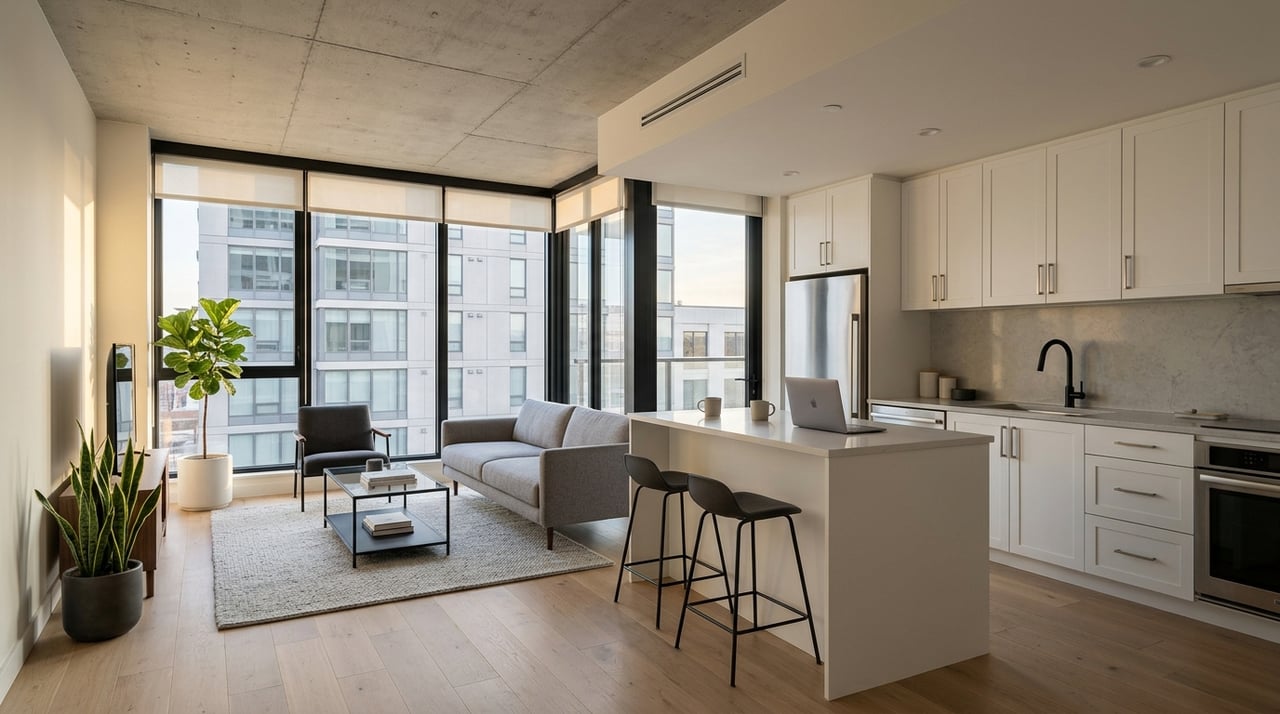
Downtown Austin Condos as Rentals: Risks and Rewards
April 23, 2026
April 23, 2026
Wondering if a downtown Austin condo will make a smart rental? You are not alone. For many buyers, the appeal is easy to see: strong rents, a walkable urban location, and the potential for long-term value. But the numbers can get tight fast once HOA dues, vacancy, and building rules enter the picture. If you are weighing the pros and cons, this guide will help you understand where the real opportunities are, where the risks tend to show up, and what to verify before you buy. Let’s dive in.
Downtown Austin remains one of the city’s premium rental areas. According to RentCafe’s Downtown Austin rent data, average rent in March 2026 reached $3,198 per month, with average one-bedroom rents at $2,758 and two-bedroom rents at $4,081. The same report notes that 51% of households are renter-occupied, and 45% of rentals are priced above $3,000.
That does not mean every condo will rent easily at a top-tier price. It does show that downtown supports a renter base willing to pay a premium for location, convenience, and a central Austin lifestyle. For an owner, that creates a strong starting point.
Downtown still has pricing power, but renters also have options. In Cushman & Wakefield’s Q4 2025 Austin multifamily report, Downtown Austin posted 8.0% stabilized vacancy, $3,480 average effective rent per unit, and about $3.60 per square foot. The report also showed 1,254 deliveries in 2025, 352 units under construction, and 859 units of net absorption.
In plain English, demand is there, but supply is active enough that your condo still needs to compete. If your unit is priced too high, lacks updates, or sits in a building with less appealing leasing terms, you may face more downtime than expected.
The clearest upside of a downtown Austin condo rental is the ability to command higher rents than many other parts of the city. Compared with Austin’s broader multifamily market, downtown sits at a much higher rent level. That can make a well-chosen condo attractive to buyers who want income potential tied to a central location.
There is also a lifestyle component that matters. A downtown condo may appeal to tenants looking for proximity to offices, restaurants, entertainment, and everyday conveniences. That can support demand over time, especially for units in buildings with desirable amenities and practical floor plans.
For most investors, the challenge is not whether downtown Austin has renters. The challenge is whether the rent covers the full cost of ownership comfortably enough to make the deal work.
That is especially important when purchase prices are high. Elliman’s Q2 2025 micro-market report shows 78701 condo residences averaging about $982,733 and $699 per square foot. At that entry point, financing costs, taxes, insurance, and dues can quickly eat into rental income.
In downtown towers, HOA dues are often the line item that surprises buyers the most. Amenity-rich buildings may offer concierge services, pools, fitness centers, and common-area maintenance, but those features come with ongoing monthly costs.
A recent sold unit at Natiivo Austin showed $970 per month in HOA fees, according to the property listing on Homes.com. That single number helps explain why two condos with similar rent potential can produce very different returns. If you are evaluating a rental, it is important to stress-test the budget using realistic dues, not best-case assumptions.
Even in a premium rental market, you should plan for turnover and competition. Cushman & Wakefield reported 8.0% stabilized vacancy downtown at the end of 2025, which suggests owners cannot assume instant lease-up at any price.
That does not mean downtown is weak. It means renters have choices. A unit that is overpriced, poorly presented, or in a building with restrictive leasing logistics may sit longer than you want, and even short vacancy periods can impact annual returns.
One of the most important things to understand is that Austin’s rental rules work on two levels. First, there are city rules. Second, there are building-level condo documents. You need both to support your plan.
According to the City of Austin short-term rental registration program, rentals of fewer than 30 consecutive days must be licensed. The city states that updated rules adopted on September 11, 2025 took effect on October 1, 2025, licenses are valid for two years, and multi-family residential sites may be limited to the greater of one unit or 10% of units. The city also requires a local contact within the Austin metro area.
That is only part of the picture. Even if the city allows a use with proper licensing, the condo association may still prohibit it.
Condo documents often place tighter restrictions on leasing than the city does. The research examples here are not downtown towers, but they show how common these rules can be in Austin condo communities. The Twilight Condominium Community documents prohibit hotel or transient rentals and require leases of at least six months. The same source notes that South Grove Condominiums also uses a six-month minimum and may add leasing controls such as permit systems.
The lesson is simple: do not assume a condo can be used as a short-term rental just because it is in Austin. In many buildings, long-term leasing is the only realistic option.
There are exceptions, and downtown has one of the clearest examples. Natiivo Austin is described by its developer as the city’s first home-sharing residential tower with flexible ownership and short-term rental capability.
That makes strategy highly building-specific. One downtown condo may function like a traditional long-term rental, while another may be intentionally designed for home-sharing. If flexible rental use matters to you, building selection is not a small detail. It is the whole strategy.
For many buyers, a downtown Austin condo works better as a long-term hold than as a pure cash-flow play. The combination of premium pricing, premium rents, and active supply suggests that monthly returns may be modest, especially early on.
At the same time, downtown remains a central, limited-space location with high visibility and ongoing demand. Based on Elliman’s 78701 pricing data and Cushman & Wakefield’s downtown rent and vacancy trends, the stronger case for ownership may be long-term value potential paired with personal use or steady leasing, rather than immediate positive cash flow.
A downtown Austin condo rental may be a good fit if you:
It may be a weaker fit if you:
Before you move forward on any downtown condo as a rental, make sure you confirm the details that most affect performance.
Check the minimum lease term, any rental cap, and whether the board requires tenant notices, approval steps, or leasing permits. These items can directly affect how and when you rent the unit.
If you are considering stays under 30 days, verify both the city’s licensing requirements and the building’s governing documents. A city license alone does not override condo restrictions.
Run the numbers with realistic rent, HOA dues, taxes, insurance, maintenance, and possible vacancy. A condo that looks great on gross rent can feel very different after fixed costs are included.
A beautiful unit in the wrong building can underperform. Amenities, dues, leasing flexibility, and overall rental appeal all matter when tenants are comparing options downtown.
Downtown Austin condos can offer real upside as rentals, but they are rarely a simple plug-and-play investment. The rewards are clear: premium rents, strong location appeal, and possible long-term appreciation. The risks are just as real: high purchase prices, steep HOA dues, building restrictions, and enough supply that tenants can be selective.
If you are thinking about buying a downtown condo as a rental, the smartest move is to evaluate the specific building, not just the neighborhood headline. If you want help comparing buildings, reviewing condo resale details, or finding an Austin property that fits your goals, connect with Lauren McCalla.
Stay up to date on the latest real estate trends.
Experience a thoughtful, guided approach designed to make your real estate process smooth and successful.