Buying a Home in Barton Hills: What Buyers Should Know
May 21, 2026
May 21, 2026
If you are thinking about buying in Barton Hills, one thing becomes clear fast: this is not just about finding a house. You are also choosing a lifestyle shaped by central Austin access, well-known outdoor spaces, and a housing stock that looks very different from many newer neighborhoods. If you want to understand how schools, parks, and home prices fit together here, this guide will help you make a more confident decision. Let’s dive in.
Barton Hills is a small residential neighborhood in south Austin near Barton Creek. According to the Barton Hills Neighborhood Association, the modern subdivision was featured in Austin’s 1956 Parade of Homes and was planned in six sections with 1,585 lots across 535 acres. That background helps explain why the area feels established and why the neighborhood layout is so different from many newer parts of Austin.
For many buyers, the appeal starts with location. Barton Hills sits in a premium central and south-central Austin pocket, close to major outdoor amenities and established residential streets. You get a neighborhood with history, mature housing, and easy access to some of Austin’s best-known public park spaces.
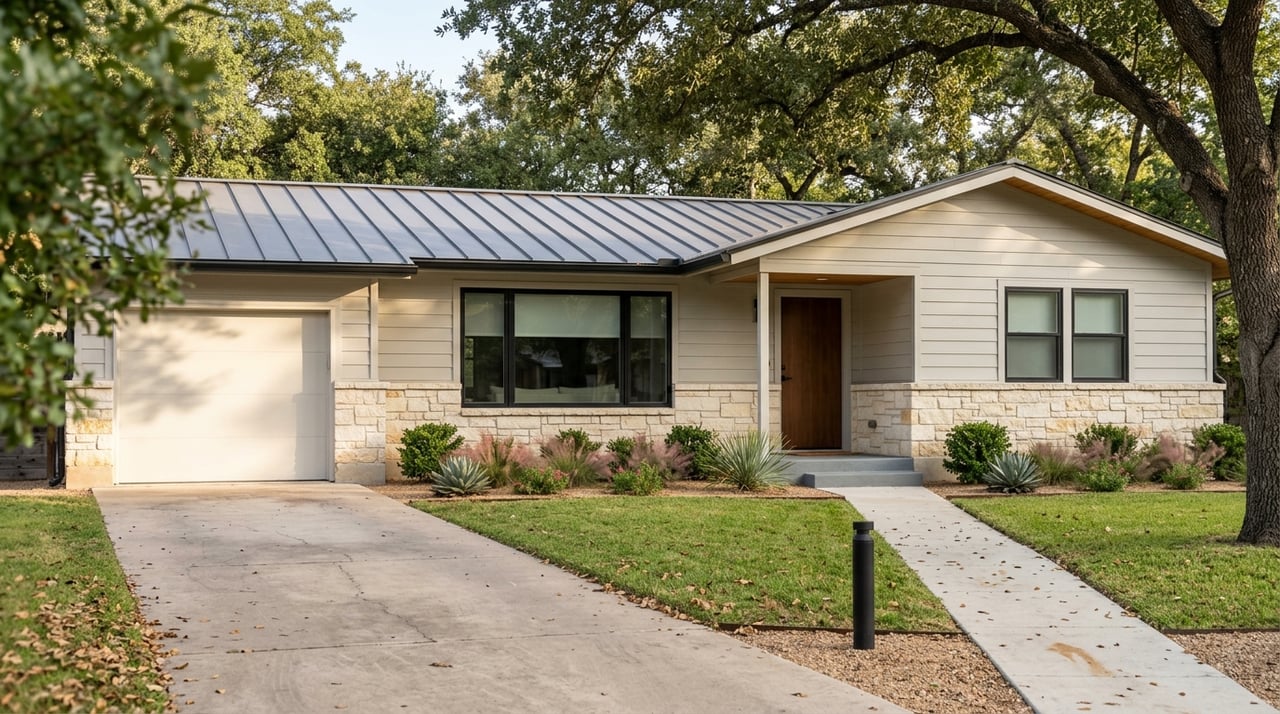
Barton Hills is known for its mix of older and newer homes, with mid-century design playing a major role in the neighborhood’s identity. The area includes contemporary homes tied to A.D. Stenger’s work and Prairie-style influences, while newer contemporary infill has also become part of the mix. In practical terms, that means you may see a wide range of architecture, updates, and lot use from one block to the next.
Lot size is another important part of the story. A City of Austin housing analysis based on Travis CAD data reported a median residential lot size of 10,005 square feet for Barton Hills homes built after 1950, compared with 7,976 square feet citywide. If lot size matters to you, that can be a meaningful advantage in a central Austin location.
Because the neighborhood is mature and land-constrained, housing choices often involve trade-offs. You may find renovated homes, homes that need updates, and properties where a larger lot is part of the value. Buyers shopping below the neighborhood median often need to think carefully about condition, size, or renovation scope.
Barton Hills is one of Austin’s higher-budget neighborhoods. Redfin’s March 2026 data shows a median sale price of $1,578,750 in Barton Hills, compared with $530,000 for Austin overall. That gap is significant, especially if you are starting your search based on broader Austin price expectations.
The market is also not especially fast-moving right now. Redfin reports a median of 157 days on market in Barton Hills, compared with 58 days for Austin overall, and homes averaged about 6% below list price. The neighborhood also had a low competition score in that same snapshot.
That does not mean every home is a bargain, but it does suggest that buyers may have more room for careful evaluation than in a faster-paced market. In Barton Hills, pricing, condition, lot size, and renovation quality can all have a major impact on value. A patient, neighborhood-specific approach matters here.
One of the biggest reasons buyers look at Barton Hills is outdoor access. The neighborhood is closely connected to Barton Creek Greenbelt, which Austin Parks and Recreation says offers more than 12 miles of trails. For many buyers, that kind of access is not just a nice extra. It is a major part of daily life.
Austin Parks and Recreation lists several greenbelt access points connected to the area, including Barton Hills School Park on Homedale Drive, Gus Fruh on Barton Hills Drive, and the Zilker/Barton Creek trailhead. The Barton Hills School Park trailhead also offers free parking, which can be especially useful if you plan to use the trails regularly.
Zilker Metropolitan Park is another major draw nearby. The city describes it as Austin’s oldest metropolitan park, spanning more than 350 acres at the junction of Barton Creek and Lady Bird Lake. The broader park system includes Barton Springs Pool, Zilker Botanical Garden, Austin Nature and Science Center, McBeth Recreation Center, Butler Hike and Bike Trail, and Barton Creek Trail.
There is also a neighborhood school-park asset at Barton Hills School Park, located at 2009 Homedale Drive. Austin Parks and Recreation lists it as a 4.76-acre park, and the city’s school-parks program says these joint-use sites are free and open outside school hours. For buyers who want nearby public outdoor space within the neighborhood, that is worth noting.
If schools are part of your home search, verify them by address before you make an offer. Austin ISD states that attendance areas and feeder patterns determine campus assignment, and for most Barton Hills addresses the core feeder path is Barton Hills Elementary, then O. Henry Middle School, then Austin High School. However, AISD has resumed boundary realignment for the 2027 to 2028 school year, so zoning should be checked carefully.
Barton Hills Elementary says it is located on a hillside next to Barton Creek and offers environmental programs, hands-on science, and cultural arts. O. Henry Middle School highlights band, orchestra, choir, theatre, Project Lead the Way, and high school credit courses. Austin High School describes itself as the oldest continuously operating public high school in Texas and uses academy programming.
For younger children, AISD says Barton Hills is served at Zilker for Pre-K4. The district also notes that students who live within AISD boundaries are guaranteed a seat at their zoned school, while transfers are based on capacity and are not guaranteed. That makes address-level confirmation an important part of due diligence.
Barton Hills tends to work best for buyers who value location, established housing, and strong access to outdoor amenities. If you are looking for brand-new uniform housing or a lower entry price, this neighborhood may require compromise. If you care about central Austin living and are open to weighing lot size, updates, and architectural character, it can be a compelling option.
As you compare homes, focus on a few basics:
These factors can shape both your day-to-day experience and your long-term satisfaction with the purchase. In a neighborhood like Barton Hills, details matter more than broad averages.
Because Barton Hills is both premium-priced and varied, it helps to go in with a clear plan. Start by defining what matters most to you: central location, lot size, architectural style, move-in-ready condition, or proximity to parks. Once you know your priorities, it becomes easier to sort through listings that may look very different on paper and in person.
It also helps to keep your expectations grounded in the neighborhood’s price point. Compared with the Austin median, Barton Hills is a much higher-budget market. If you want to buy here without stretching too far, you may need to consider smaller homes, homes needing updates, or a narrower section of the neighborhood.
In a market where homes are taking longer to sell, buyers have an opportunity to slow down and evaluate the full picture. That includes the home itself, the lot, the surrounding block, and how the property fits your budget and timeline. A thoughtful approach can help you avoid overpaying for features that do not line up with your actual goals.
If Barton Hills is on your radar, having local guidance can make the process feel much more manageable. Lauren McCalla brings an Austin-native perspective, clear communication, and practical support to help you weigh neighborhoods, compare homes, and move forward with confidence.
Stay up to date on the latest real estate trends.
Experience a thoughtful, guided approach designed to make your real estate process smooth and successful.