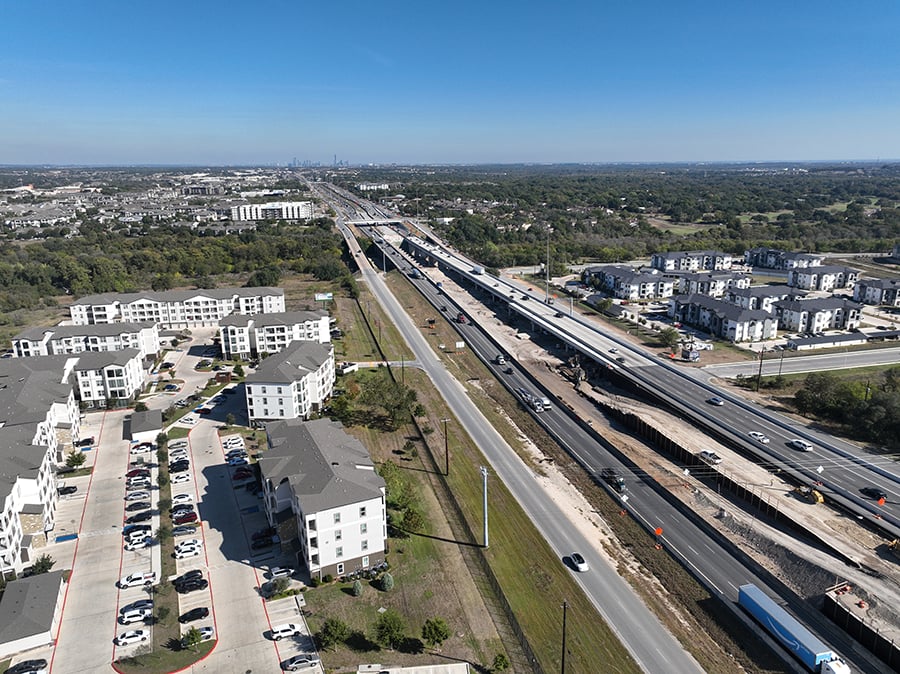
I-35 Traffic Near Onion Creek: Current Delays and Future Outlook
South Austin Neighborhoods Lauren McCalla December 7, 2025
South Austin Neighborhoods Lauren McCalla December 7, 2025
Interstate 35 (I-35) is one of Central Texas’s most critical roadways — connecting South Austin, Travis County, and beyond. For residents near Onion Creek and drivers who use the corridor daily, understanding traffic patterns, ongoing construction, and future projections is essential for planning commutes, real estate decisions, and long-term lifestyle expectations.
Below is a clear overview of what’s happening with I-35 near Onion Creek, the expected construction timeline, and how these changes could impact traffic now and in the future.
I-35 serves tens of thousands of vehicles every day through the South Austin area — from Williamson County through Travis County and into Hays County. Heavy congestion during peak hours is common, especially near key exits like Ben White Boulevard (SH-71), William Cannon Drive, and Slaughter Lane.
Ongoing construction and ramp modifications in some sections contribute to:
Slower peak-hour traffic
Increased reliance on frontage roads
More frequent lane shifts or closures
Recent traffic incidents — such as a major crash that closed all lanes near Slaughter Lane, backing traffic back toward TX-71 — highlight how sensitive the corridor is to disruptions. Drivers experienced delays of up to an hour as alternate routes and frontage roads were used to manage flow. MySA
TxDOT (Texas Department of Transportation) is actively working on the I-35 Capital Express South Project, which includes major reconstruction work through Central and South Austin — including near the Onion Creek area.
This project is part of a statewide strategy to improve safety, traffic flow, and connectivity as the region continues to grow. The improvements focus on:
Widening lanes
Reconstructing bridges (including the I-35 bridge over Onion Creek)
Adding managed lanes and improved ramp configurations
Strengthening connectivity to major roads and local streets
In the Capital Express South Project, crews are building elevated managed lanes between SH-71/Ben White Boulevard and Slaughter Lane, reconstructing the South Boggy Creek bridge, and working on the new Onion Creek bridge and main-lane entrance/exit ramps. TxDOT+1
These upgrades aim to help long-term traffic movement by increasing capacity and reducing bottlenecks.
Construction in the South Austin segment has been underway for several years and will continue for multiple phases:
Early phases have already seen work on bridge reconstruction and managed lanes.
Subsequent phases include widening the Slaughter Creek bridge and completing additional ramp work. TxDOT FTP
TxDOT has not published a firm completion date solely for the South project, but statewide efforts point to long-term construction through the late 2020s and early 2030s. For example:
The Capital Express Central Project — directly north of the Onion Creek area — shows active work continuing and is expected to wrap up by around 2033. TxDOT+1
While the exact finish line for the South segment near Onion Creek isn’t officially confirmed, it is part of a coordinated corridor-wide program — meaning that traffic impacts are expected to continue throughout the decade as elements are completed.
As managed lanes and elevated roadways are completed, longer-range forecasts suggest:
Increased capacity
Better separation of local and thru traffic
More predictable peak-hour flow
However, these improvements can also change traffic patterns — as drivers adjust their routes to take advantage of managed lanes and rerouted connectors.
During construction, frontage roads have played a key role in maintaining access and reducing total lane closures. In some cases, temporary lane shifts or frontage detours are part of the plan to keep traffic moving even as main lanes are rebuilt. Pulice Construction
Drivers should continue to expect periodic lane closures, nighttime work, detours, and changes in entrance/exit availability — especially around major cross streets and bridges. These short-term delays are a normal part of large infrastructure projects and usually occur to maintain safety and structural work zones.
Living near Onion Creek means being close to a major transportation corridor, which comes with both advantages and inconveniences:
Positives:
Improved long-term commute reliability once projects are completed
Additional lanes and redesigned ramps can reduce congestion
Enhanced connectivity to Austin, South Austin corridors, and regional travel routes
Challenges:
Ongoing construction through the late 2020s / early 2030s
Periodic traffic shifts and detours
Nighttime closures or reduced lane availability during peak build phases
TxDOT and local partners regularly update traffic notices, timelines, and construction alerts online. Watching those notices — and using tools like traffic apps or morning commute alerts — can help you plan around temporary closures and lane shifts.
As projects continue, drivers in the South Austin and Onion Creek area should prepare for short-term inconveniences that support long-term gains in travel times, congestion relief, and infrastructure durability.
The ongoing I-35 reconstruction near Onion Creek is part of one of the largest highway modernization efforts in Central Texas history. While the work can create headaches for drivers today, the planned improvements are designed to support long-term growth, safety, and connectivity. From widening lanes to rebuilding bridges and adding managed travel corridors, this infrastructure investment is meant to keep traffic moving for decades to come.
If you drive I-35 regularly or are considering real estate near Onion Creek, it’s important to understand both the short-term traffic patterns and the long-term vision for one of Central Texas’s most vital roadways.
Stay up to date on the latest real estate trends.





Experience a thoughtful, guided approach designed to make your real estate process smooth and successful.